
No one wants to end up in the hospital. The fear of the unknown and the forced reckoning with one’s own mortality are not life moments many look forward to. But like so many things in life, we are often not in control of when, or if, we find ourselves laying in a hospital bed.
Beyond receiving immediate medical care, oftentimes one of the first thoughts that crosses a patient’s mind is how to reconcile the border between their own spirituality and the secularism of the healthcare system. Some may find meaning in and be accepting of their situation, while many feel abandoned and hopeless.
Hospitals like Zuckerberg San Francisco General Hospital and Trauma Center (ZSFG) are highly equipped to deal with all types of medical needs, but there is sometimes a gap when spiritual, emotional, and existential needs arise. This is where chaplains like John McLean Wolff come in.
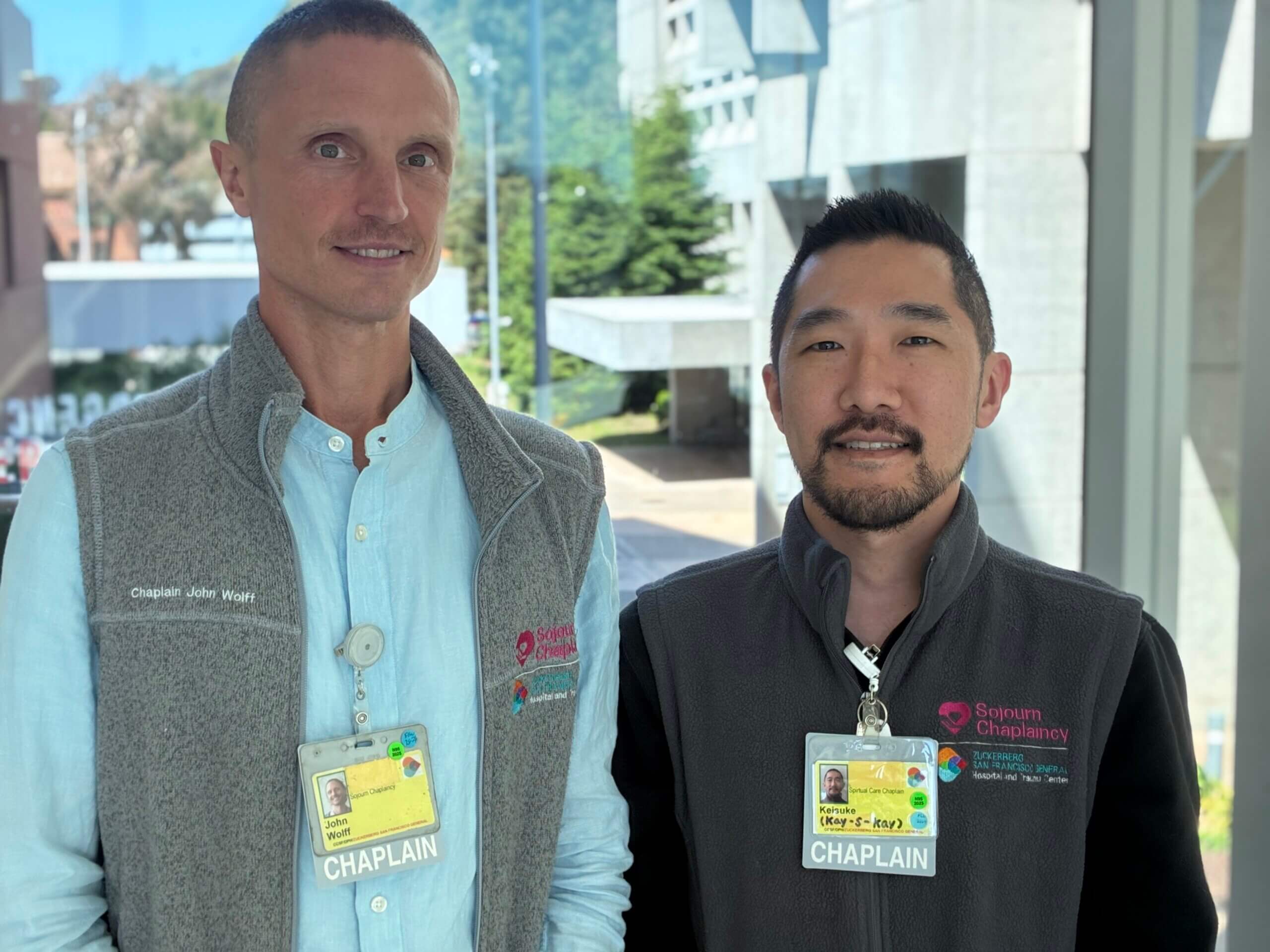
Hospital chaplains are post-graduate, clinically trained providers who offer spiritual and emotional support to patients, families, and staff. Regardless of religious or non-religious background, they provide a safe space to process grief and trauma, navigate difficult medical decisions, and facilitate different calming rituals like meditation.
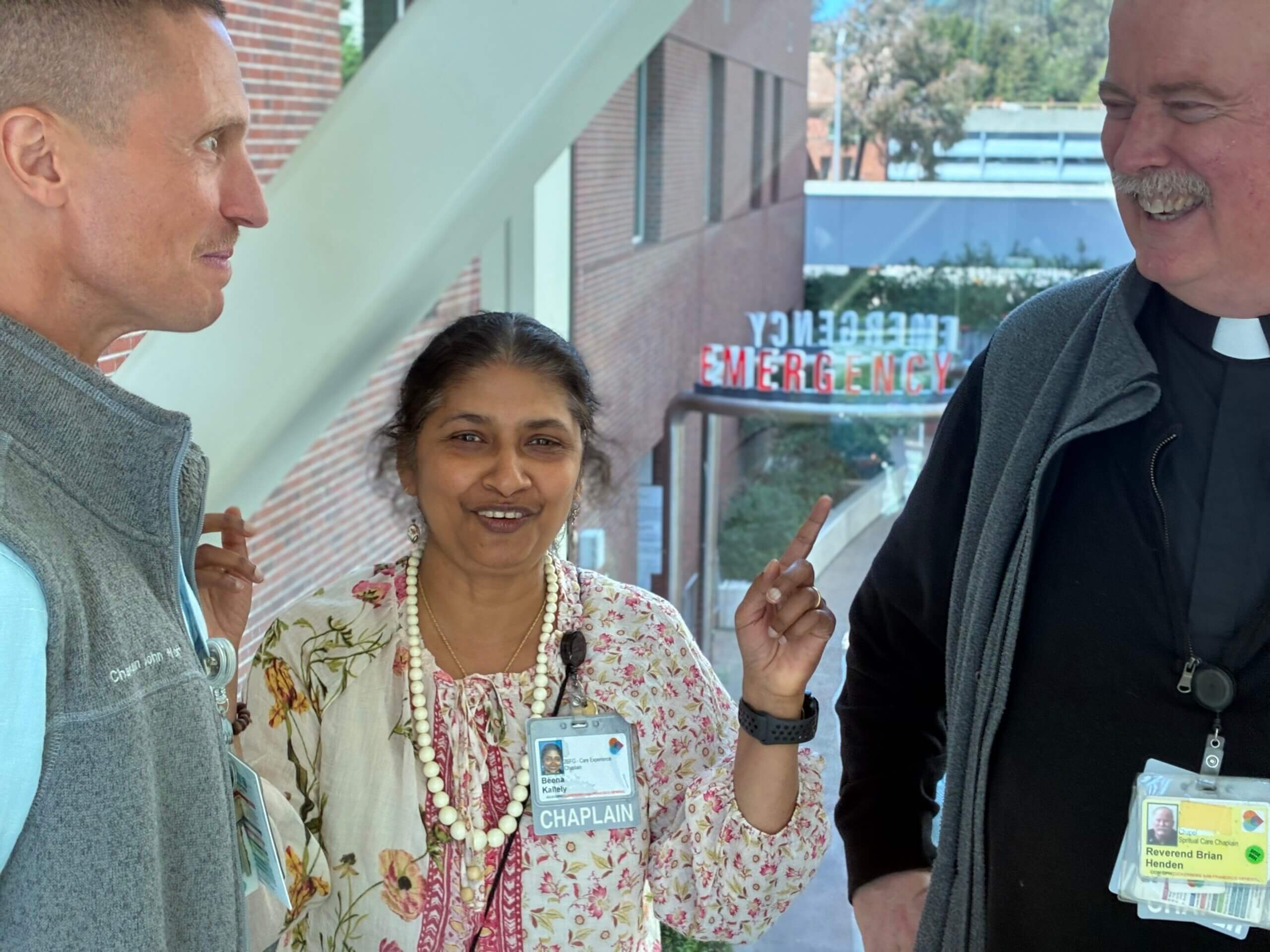
Today, John serves as the Executive Director of Sojourn Chaplaincy, a multi-faith spiritual and emotional care and counseling service at ZSFG that boasts a diverse group of chaplains in terms of education, background, beliefs, and all other aspects of social location. He also continues to work with patients and staff members as an active chaplain, stating that providing care directly enables him to be a better leader.
John shares that his work as a chaplain is all about building relationships and rapport with patients and their families alike, creating a comfortable space that invites trust and open conversation. From two minute encounters all the way up to 50 minute meetings a few times a week, depending on what they’re going through and what kind of support they need, the work of a chaplain is inherently patient-centered.
“So much of this work is helping people connect to what their implicit beliefs and paradigms are, helping them examine those, and then helping them connect to some more life-giving paradigms so that they can flourish in a world in which it can be so hard to succeed,” said John.
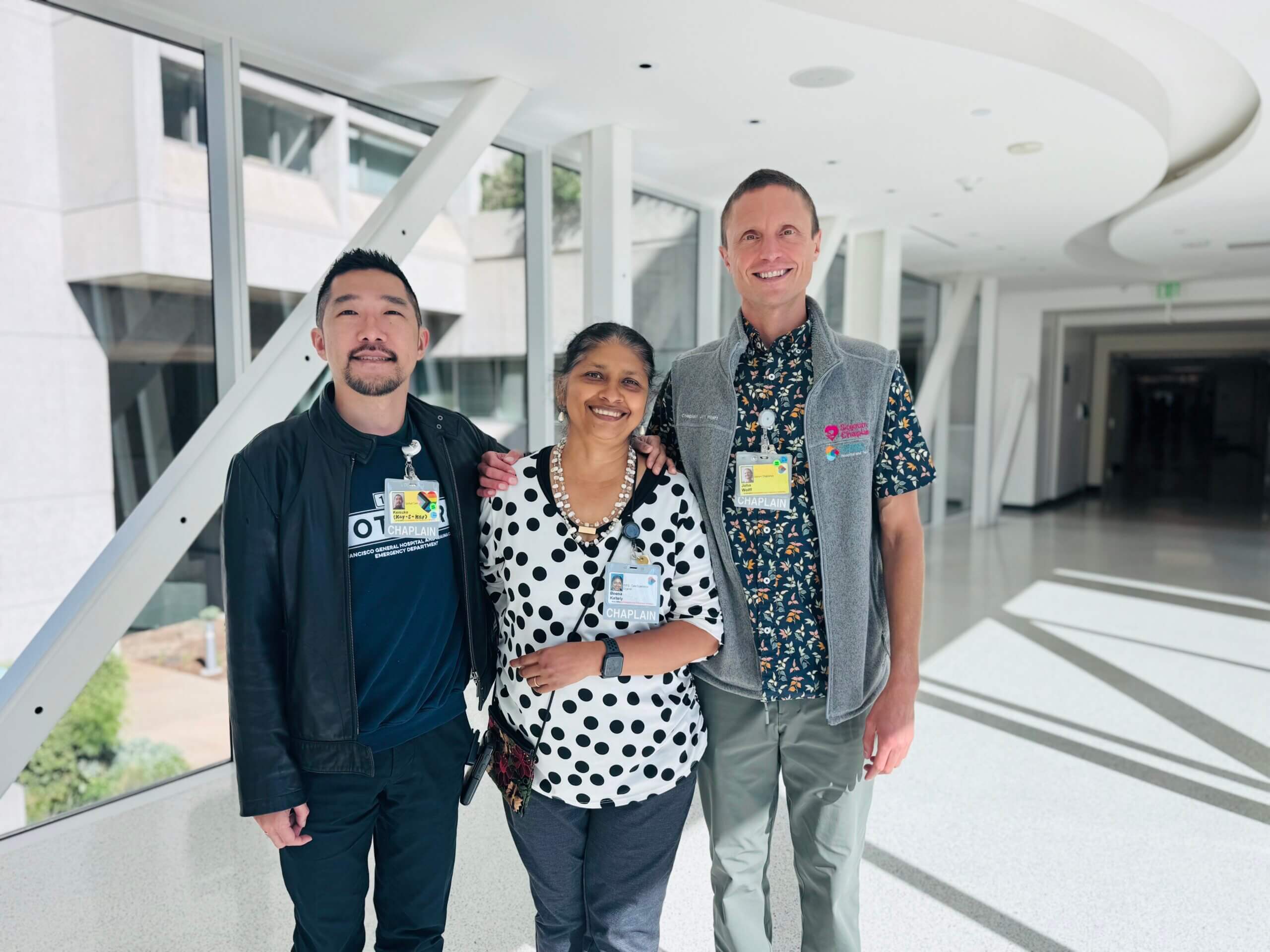
While chaplains are often associated with only providing patient care, they also work heavily with staff. At ZSFG, this work is done through Code Lavender, a rapid response evidence-based program that provides crisis intervention and debriefing with staff after challenging clinic incidents.
The care offered can be anything from providing wellness resources and snacks or tea to having dedicated process groups to provide a safe space to discuss what may have happened and the impact it has had on staff members emotionally, spiritually, and professionally. John shares that these debriefings also aim to promote peer support, as evidence shows this is one of the best ways to mitigate symptoms of secondary trauma.
“Something that sets us apart is that we give innovative, full spectrum spiritual and emotional care,” said John. “We are constantly reminding people how expansive our scope is and that emotional care does not always need to be religious.”
John shares that ZSFG staff clearly love the patients they serve and have a deep dedication to the mission and work. While important, being so emotionally tied to the mission can leave providers feeling especially hurt by complex medical events, lack of resources, and systemic challenges. John and his team of chaplains work closely with staff to help them not run from the trauma and grief, but process them and move forward in a healthy manner.
Beyond group sessions with Team Lavender, Sojourn Chaplaincy also provides one-on-one care for staff. This is a completely confidential space that lets providers speak and process with someone who understands what they’re going through.
“To have the trust of my colleagues to the point where they’ll lay down their load with me and get into how wonderful and complicated it is to work here is a profound privilege and gives me a really deep sense of gratitude,” said John.
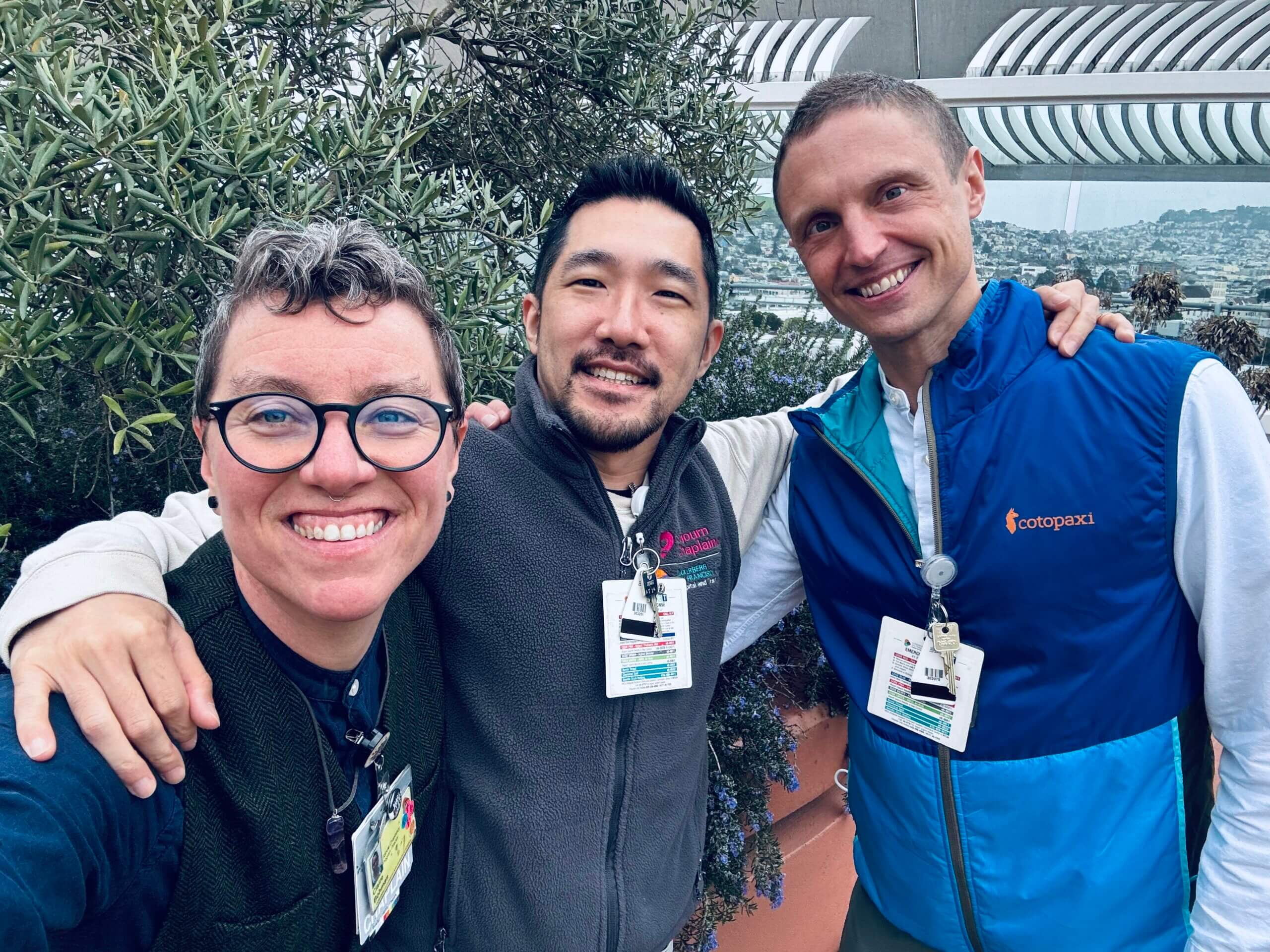
The work of a chaplain is as challenging as it is rewarding. Faced with people going through their darkest of days to witnessing patients go on incredible healing journeys, continuing in this line of work requires a strong emotional foundation.
“It seems at times it could make one a little hopeless to constantly see things that don’t seem to be getting better,” said John. “But then I take a look around me at this wonderful institution and remember the many moments of profound healing that occur within these walls.”
John finds great meaning in working in a large institution like ZSFG that has so many people so clearly dedicated to serving some of the most marginalized people in San Francisco.
“It gives me great hope every day to see the way that teams come together,” said John. “Sojourn has been a mission-driven organization for over 40 years, and this hospital is incredibly mission-driven. It makes me feel so excited and grateful to be involved.”
